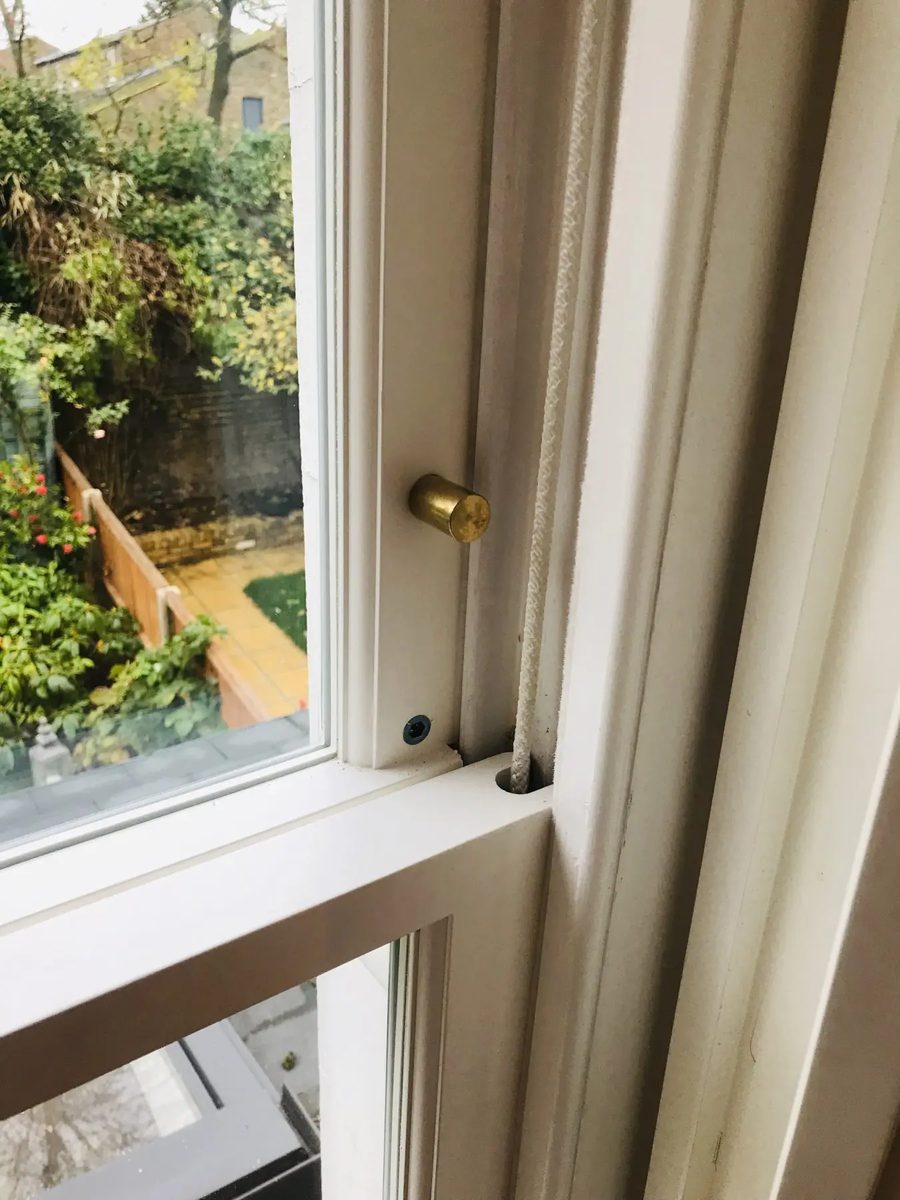
Draughts and cold glass are not the same thing
Traditional sash windows need a small amount of clearance to move freely. Over time, wear, paint build-up and movement within the joinery can create larger gaps, allowing uncontrolled air into the room. If you can feel a distinct draught, hear the sash rattle or see curtains moving near the frame, servicing and draught proofing may make a significant difference.
The glass itself can be a separate issue. Even when gaps around the sash are properly sealed, single glazing can feel noticeably cold during winter. A good survey should establish whether the problem is primarily air leakage, cold glazing, external noise—or a combination of the three before recommending the work.
What does sash-window draught proofing involve?
Effective draught proofing should form part of properly servicing the window rather than simply adding visible seals to the frame. The sashes are removed and checked, excess paint is eased where necessary and the cords, weights and movement of the window are assessed. Discreet brush seals can then be incorporated into the appropriate beads and meeting rails before the sashes are rebalanced.
The aim is to reduce unwanted gaps while allowing the window to continue operating as it should. Existing ventilation also needs to be considered. Draught proofing should improve uncontrolled air leakage without compromising ventilation that the property genuinely requires.
When should you consider double glazing?
If a sash window has been properly serviced and draught proofed but cold glass or external noise remains a concern, upgrading the glazing may be the next step. Where the original box frame remains sound, it may be possible to retain it and fit new made-to-measure hardwood sashes with slim double glazing. This can improve performance without requiring complete window replacement.
For period and heritage properties, the specification needs particular care. Glass thickness, glazing bars, traditional proportions and any planning requirements should all be considered before deciding what is appropriate. At STILE, we start by identifying what is actually causing the problem. Where servicing and draught proofing are sufficient, sound original joinery can remain in place. Where glazing is the limiting factor, we can then consider the most appropriate upgrade.