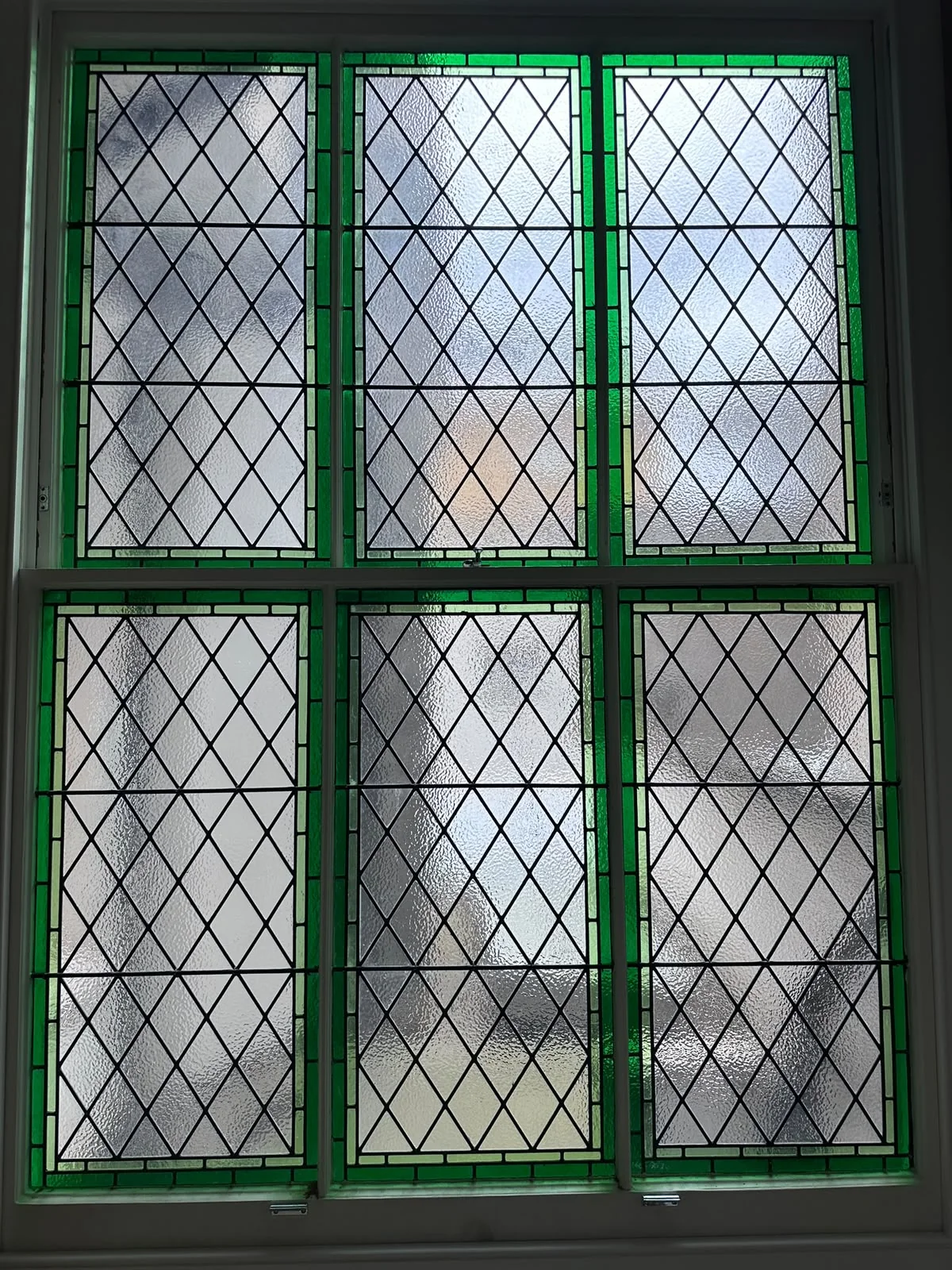
Start with the existing glass
Original stained or leaded glass should be assessed in its own right before alterations are made to the surrounding timber. Individual pieces may be cracked, leadwork can become bowed or weakened, and previous repairs are not always apparent while the panel remains in place. Its condition, construction and method of support should therefore be understood before removal.
Where existing glass contributes to the character of the property, retaining it can help determine the design of repaired or replacement joinery. Rather than asking an original panel to fit a predetermined door or sash, the new joinery can be detailed around the proportions and requirements of the glass.
Designing new stained glass
New decorative glass should relate to the complete entrance or window rather than being treated as an isolated panel. Colour, pattern and leadwork can take cues from the age and character of the property, the proportions of the joinery and any surrounding fanlights or sidelights.
The glass specialist and joiner then need to work to the same dimensions and understand how the finished panel will sit within the timber. STILE coordinates this relationship between the specialist glasswork and the surrounding joinery, so the rebates, proportions and installation are considered before manufacture begins.
Consider it from inside and out
Stained glass changes character throughout the day. From inside, daylight brings colour and detail into the room. From the street, the design sits alongside the door colour, surrounding joinery and wider façade. Privacy and the appearance of the glass after dark may also influence the design.
In some circumstances, additional protective glazing or incorporating decorative glass within a glazed unit may be possible. The suitability of these approaches depends on the construction of the panel, the available space within the joinery and any conservation requirements. Where specialist assessment is needed, this should be established before the timber and glazing specification is finalised. At STILE, we bring the joinery and specialist glasswork together as one considered design, whether preserving an original feature or creating something new for the property.